


JavaScript is disabled
Our website requires JavaScript to function properly. For a better experience, please enable JavaScript in your browser settings before proceeding.
Besides double charging any other big things to watch out for that could end really bad,those thoughts are in the back of my head
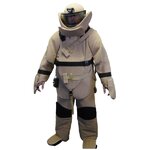
You did get the blast suit, right ?

protechsales-united-shield-international-Olympia-bomb-disposal-suit.jpg

JK....have fun, you'll be fine.

:)
 
Hornady Lock-N-Load AP looks like a nice piece of kit.
Not the full-blown Ammo Plant, just the basic progressive.
In the videos, it looks like it runs smooth with that 1/2 and 1/2 index feature.

I just picked up a LNL and loaded my first 350 rounds in about an hour. There are a series of videos available via youtube on hints and tricks for the LNL that I watched before setting mine up. I didn't have a single misfeed, powder issue, or alignment problem. I know everyone raves over the Dillons, and they are no doubt very good, but so far so is the Hornady LNL and for a lot less dough.
 
When it comes to crimping...

The below image shows just how little crimp and belling is needed. I created this a while back for my Instagram account to show the differences in the steps.

The rounds shown are .357 Magnum and use roll crimp and not taper crimp. The concept is the same though with amount of flare and crimp. Overdoing case flare/belling will result in cracked cases and overworking the mouth of the case leading to cracking when fired. The idea is to use 'just enough' to get what you need done without going overboard.

#1: case unmodified
#2: case with bell/flare added so Bullets starts to seat properly
#3: bullet should sit inside case a little bit. On this setup the bullet is actually nested .110" inside the case.
#4: bullet seated to near proper depth. Because the die crimps AND seats the bullet you cannot fully seat without crimping in one step, that's why it's not fully seated.
#5: seated to proper depth and enough crimp is added to remove the earlier case belling as seen in photo #4 & #3. The top of the ram is where the die is dialed in for the crimp and seating

IMG_1994.JPG

With your .45 you have a taper crimp. The taper crimp ends up doing similar but no roll in at the very top of the brass as seen below:
IMG_2183.PNG

Your dies manual has a LOT of this information and how to set your dies up to deliver perfect crimp every.single.time. Believe it or not they (die instructions) will be invaluable at this step.

I may do one in .40 or 9mm down the road for comparison.
 
Last Edited:
Josh,

I'd love to get in on the education. As mentioned on a previous reply about the abyss; it's true and that's just from stocking up on supplies! The train has been built, but yet to get on the tracks.......
 
So I realized I haven't read much about crimping,I've looked thru the books and I feel like I'm missing something or not reading it right.it just says how to get a light or heavy crimp,I don't see any info on the loading data either.so how do I figure out what kind of crimp I need,where to put it and if I did it right?

45ACP Crimp(?)

45acp is not really crimped as much as "de-flared" as it head spaces on the front edge of the case.
The "press fit" of the bullet into the expanded case holds the bullet in place, NOT any crimp.
The amount of "de-flare" is a diameter that is the sum of the bullet diameter plus 2x the case wall thickness measured at the case mouth of a completed round.
Going smaller will only deform the bullet.
Of course you should always do the plunk test too.

The crimps pictured are for a revolver round that head spaces on the rim, NOT a 45acp, and do not apply here.
jmo
:D
 
Last Edited:
You can have flush primers but they are not seated all the way in. I recently had some Fail to Fires, where the firing pin struck the primer but only pushed the primer in all the way. They had been flush.

Good point, I had this too and found I had reloaded cases enough times that I needed to clean the primer pockets. But it's still a good check.
 
I just picked up a LNL and loaded my first 350 rounds in about an hour. There are a series of videos available via youtube on hints and tricks for the LNL that I watched before setting mine up. I didn't have a single misfeed, powder issue, or alignment problem. I know everyone raves over the Dillons, and they are no doubt very good, but so far so is the Hornady LNL and for a lot less dough.
Yeah, it looks like you get A LOT for your money with that one...best deal for a progressive, looks like to me.
And with the current promo you get 500 free bullets. Deduct that value and you're right around the cost of a Lee.
Did you get a certificate or something for those free bullets ?
 
I thought he was clear on the difference between roll crimp and taper crimp.
His schematic at the bottom of the post makes it crystal clear.

You never know what details someone will miss. Lots of folks will only see what's in the pic. IMO it never hurts to double emphasize. :)
 
When it comes to crimping...
The below image shows just how little crimp and belling is needed. I created this a while back for my Instagram account to show the differences in the steps.
The rounds shown are .357 Magnum and use roll crimp and not taper crimp. The concept is the same though with amount of flare and crimp. Overdoing case flare/belling will result in cracked cases and overworking the mouth of the case leading to cracking when fired. The idea is to use 'just enough' to get what you need done without going overboard.
#1: case unmodified
#2: case with bell/flare added so Bullets starts to seat properly
#3: bullet should sit inside case a little bit. On this setup the bullet is actually nested .110" inside the case.
#4: bullet seated to near proper depth. Because the die crimps AND seats the bullet you cannot fully seat without crimping in one step, that's why it's not fully seated.
#5: seated to proper depth and enough crimp is added to remove the earlier case belling as seen in photo #4 & #3. The top of the ram is where the die is dialed in for the crimp and seating
View attachment 342921
With your .45 you have a taper crimp. The taper crimp ends up doing similar but no roll in at the very top of the brass as seen below:
View attachment 342923

Your dies manual has a LOT of this information and how to set your dies up to deliver perfect crimp every.single.time. Believe it or not they (die instructions) will be invaluable at this step.

I may do one in .40 or 9mm down the road for comparison.
Great post, @Dyjital ! That is a beautiful example of a roll crimp.
Over the years I've kept a few examples of bad crimps. Fugly. I think I finally pulled them all.
Note to @Josh89, the roll crimp needs to be set carefully for your cases. Taper is more tolerant of variation.
For Crimping:
I use taper on 9mm and 45ACP, roll on 40S&W & 357. I use a Lee Crimper die on the 223 I load into my AR.
I don't use any crimp on any other bottle necked rifle cases. When your dies are set properly, the neck will have enough tension to hold the bullet firmly in place once you seat it.

This underscores the importance of inspecting your cases. Crimping or not, all bets are off if you have a cracked case neck, bulges in the case (seen a lot of 40S&W with those), excessive stretching, blah, blah, blah.

45ACP Crimp(?)
45acp is not really crimped as much as "de-flared" as it head spaces on the front edge of the case.
The "press fit" of the bullet into the expanded case holds the bullet in place, NOT any crimp.
The amount of "de-flare" is a diameter that is the sum of the bullet diameter plus 2x the case wall thickness measured at the case mouth of a completed round.
Going smaller will only deform the bullet.
Of course you should always do the plunk test too.

The crimps pictured are for a revolver round that head spaces on the rim, NOT a 45acp, and do not apply here.
jmo
:D
I never thought of a revolver as having any headspace at all.
Proper seating depth is important in semi-auto pistol and straight wall rifle cartridges because too much and you won't return to battery, too little and the round may not fire.
I've never deformed a bullet, always rippled the case instead.

Yeah, it looks like you get A LOT for your money with that one...best deal for a progressive, looks like to me.
And with the current promo you get 500 free bullets. Deduct that value and you're right around the cost of a Lee.
Did you get a certificate or something for those free bullets ?
Your receipt plus the order form off their web site (get loaded). They also have it that you get 100 bullets if you buy a die set.
 
I thought he was clear on the difference between roll crimp and taper crimp.
His schematic at the bottom of the post makes it crystal clear.

He is clear...
Neither the images or the schematic represent the condition of a loaded 45ACP.
Help me get into reloading
For me, there is no crimp on a 45acp, none, the schematic shows a generic rimmed round with a red circle at the case mouth, and an inset of both a rolled and tapered crimp, with the tapered crimp showing a step, neither apply to a 45acp.

But that's just my opinion, not that it's worth anything.

Look at the sammi drawing posted, do you see any step/"taper crimp"...me neither.
Look close at factory loaded 45acp, see any crimp...there is none.
IMO, a roll crimp is used for bullets with a crimp groove, a taper crimp is used for bullets with a cannula.
Help me get into reloading

Like tumbling and many other aspects of re-loading, the "crimp" can be controversial, with differing personal methods/opinions.
I'm comfortable with what I do/post that may be different from others, and apologize for the image nit picking I've done in this post.
I don't really want to debate any of it.
cheers,
:D
 
Last Edited:
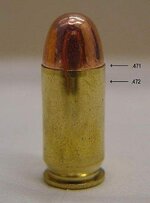
On the cartridge drawing there is a measurement at the mouth of the case. In this case it is .473 for 45 auto. After you crimp measure the case mouth with calipers. .45 auto usually crimps between .473 to .470. That is about where you want to be so the case mouth headspaces in the chamber properly.
View attachment 342865

I would sort of disagree with the measurements above. When I've measured they didn't match up with what the book said. So don't panic if your are off a little bit. If the finished/dummy round "Plunks" and falls out your good to go. There's too much variance in brass thickness I believe. And bullet diameter(s) differing in the .0005 range isn't uncommon.

45ACP Crimp(?)

45acp is not really crimped as much as "de-flared" as it head spaces on the front edge of the case.
The "press fit" of the bullet into the expanded case holds the bullet in place, NOT any crimp.
The amount of "de-flare" is a diameter that is the sum of the bullet diameter plus 2x the case wall thickness measured at the case mouth of a completed round.
Going smaller will only deform the bullet.
Of course you should always do the plunk test too.

The crimps pictured are for a revolver round that head spaces on the rim, NOT a 45acp, and do not apply here.
jmo
:D

This above really gives the right idea about "taper crimping". Considering the leverage required to decap/resize in respect to leverage to "De-flare, taking out the flare needs very little leverage. You may find out one day when you pinch your finger between the ram and a die just how little movement of the ram can impart SO much leverage. The slightest resistance when "De-flaring" will be plenty to do the job.

Along the same lines, it takes very little leverage to seat a primer, compared to de-capping/resizing. I want to feel exactly when the primer bottoms out. I will always use a hand primer seater rather than the press. YMMV So much of what you are doing in reloading has to do with "Feel". At least that's my story, and I'm sticking to it!

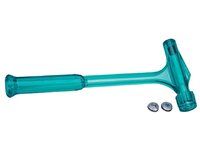
Last thing....Do you have one of these....... If not GET ONE. You will use it. Bullet pullers should be offered with these press kits!

685703.jpg

Good Times!
 
Most semi auto rounds have enough taper on the inside to hold bullets in pretty well through neck tension. A slight taper crimp removes any bell, seals the case mouth, and is extra insurance against bullets moving. The factory crimp die will give you instructions on how to adjust it properly, just a little is all that's needed.
 
I connected these "dots" for what could be called an exaggerated drawing of a "taper crimp" for .45ACP (as an example). I think it was meant in contrast to a roll crimp.
Taper Crimp3.jpg


And then in practice it might look more like this...
Taper Crimp 45ACP.jpg

The important thing was to explain the differences between a roll crimp and a taper crimp to the new reloader.
And of course we experienced handloaders have our particular likes, dislikes and mental images of how something should be.
I'm especially crotchety and set in my ways.


:p
 
Most semi auto rounds have enough taper on the inside to hold bullets in pretty well through neck tension. A slight taper crimp removes any bell, seals the case mouth, and is extra insurance against bullets moving. The factory crimp die will give you instructions on how to adjust it properly, just a little is all that's needed.
Lee Factory Crimp die.
I don't have one, but I know that they are very popular.
What is the finished product difference between the LFC die and a taper crimp die ?
 
Lee Factory Crimp die.
I don't have one, but I know that they are very popular.
What is the finished product difference between the LFC die and a taper crimp die ?

Taper crimp dies just do what they say, a taper crimp at the case mouth.

The FCD has a carbide sizing ring that squeezes evenly along the length of the case where the bullet is, it lets you crimp more firmly than a standard die, while at the same time distorting everything less.

FCDs don't work so well with oversized cast bullets, since they squeeze the whole case they squeeze the bullet down as well.

If you already have a taper crimp die there's probably no reason to switch, Lee includes a FCD with the 4 die sets, and I prefer to seat and crimp in separate operations so I use them quite a bit.
 
Yeah, it looks like you get A LOT for your money with that one...best deal for a progressive, looks like to me.
And with the current promo you get 500 free bullets. Deduct that value and you're right around the cost of a Lee.
Did you get a certificate or something for those free bullets ?

Yup, as someone else posted, you download a form from their website, send the rebate receipt Cabelas gives you, and the UPC code from the box....oh, and a check to cover shipping for $14 or $15.... At the price, and when I applied the Cabelas points to the sale, I was out the door with caliber change shellplates for just over $200...not counting the free bullets. Naturally, a week later, Cabelas had a sale that knocked another $60 off. I called them and they have me credit for the difference. I am now through 1000 rounds and the thing is working flawlessly. Best purchase I ever made. And by the time you factor in the bullets, I am only around $140 into the setup. I just couldn't resist at that kind of a price.
I believe the sale continues to the end of the month if anyone is leaning towards a LNL.
 
I have not read all 15 pages of replies so if this has been said I apologize. If you have a Cabelas nearby check their website, once a month they hold reloading classes, .223 and. 38. They show you how to prep cases and the various tools to use so you can make an informed decisions on the equipment you may use. I think it costs around $130. I think it is an all day class.
 
@Josh89 If/When you get to loading revolver ammo, or ammo requiring a "Roll Crimp", post again. There are some fine points to know when loading roll crimped ammo to make it less trouble free. I learnt all on my own, but I'm sure we'd be happy to help you avoid some small frustrations!
 

Upcoming Events

New Classified Ads

Back Top