


JavaScript is disabled
Our website requires JavaScript to function properly. For a better experience, please enable JavaScript in your browser settings before proceeding.
Messages
686
Reactions
1,368
I need some help calculating water flow and can't find a good calculator/formula to do it. So, hoping some of you might be able to help. Water pressure at spigot is 60psi and 5gpm. Looking to do about 750' of garden hose - 3/8, 1/2, or 5/8 whichever makes the most sense (assuming 5/8 as it is the largest that allows for the most water flow) up a 10 degree angle to the top of a hill. I am assuming with these numbers, it is likely to be a trickle of water that comes out. However, is there a way to calculate gpm with this?
 
Last Edited:

Please keep in mind the pressure at the top of the hill will be reduced by .434 psi per foot in rise of Elevation.
 
Last Edited:
To simply this: your pressure is 65 psi.

If the rise in Elevation is 32 feet, you'll lose approximately 16 psi.

If the rise in Elevation is 100 feet, you'll lose 50 psi.

I rounded up the pressure lose to .5 psi per ft. to simply it.

The pressure lose is due to overcoming gravity.
 

Please keep in mind the pressure at the top of the hill will be reduced by .434 psi per foot in rise is Elevation.
Thank you, this helps some. Just based on the loss of pressure per foot over the rise of 750 feet would then be .434 x 750=325.5psi loss. Starting with 65 psi means the water isn't going to make it up the hill.
 
Thank you, this helps some. Just based on the loss of pressure per foot over the rise of 750 feet would then be .434 x 750=325.5psi loss. Starting with 65 psi means the water isn't going to make it up the hill.
Are you Calculating the length of hose or the rise in Elevation?

You mentioned the hose being 750 feet long correct.

Length of hose and rise of elevation are 2 different things.

If there is a rise of Elevation of 750 feet, the water will stop flowing long before the top of hill.
 
To simply this: your pressure is 65 psi.

If the rise in Elevation is 32 feet, you'll lose approximately 16 psi.

If the rise in Elevation is 100 feet, you'll lose 50 psi.

I rounded up the pressure lose to .5 psi per ft. to simply it.

The pressure lose is due to overcoming gravity.
Thanks. Time to figure out the height of the hill. Once I have that, then I know the psi at the end of the hose based on elevation. But, what about length of hose and gpm?
 
Are you Calculating the length of hose or the rise in Elevation?

You mentioned the hose being 750 feet long correct.

Length of hose and rise of elevation are 2 different things.

If there is a rise of Elevation of 750 feet, the water will stop flowing long before the top of hill.
Sorry. The hose will be 750 feet. I was originally thinking the hill was 750 feet in elevation. I need to re-calculate based on the height of the hill for pressure loss.
 
The height of the hill has less impact on pressure loss than the resistance from the hose. The larger the hose diameter, the smaller the loss.

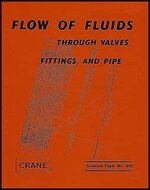
As a process control systems engineer, one of the most useful items on my bookshelf was this:

1724779431828.jpeg

Crane Technical paper 410
 
The loss from the hose is because of friction. Friction increases as the square of velocity, so slow flow from a large hose is the most efficient. Roughness inside the hose/pipe is also important.

If this is not for drinking water, polyethylene tubing may be affordable, durable, and move the water with less friction. Some types are approved for drinking water, but are more expensive.
 

Here's a simple calculator for you to use, just plug in the numbers. This calculator wouldn't recognize 5/8" or 3/4" when I entered them but did accept 1/2" and 1".

There isn't an option for garden hose. Galvanized piping is rougher then garden hose and the pressure loss was 7.6 psi when I entered your values.

Correct me if I'm wrong.

Did you actually verify your flow rate at the hose bibb?
 
Last Edited:
Thanks, everyone. The initial pressure is actually 60psi, not 65. I believe the hill height is about 130 feet. Based on this, there is a loss of about 56.5psi through the hose depending on the diameter and friction of the interior. This leaves about 3.5psi at the end of the tube, but how do I determine the gpm from that?
 
Thanks, everyone. The initial pressure is actually 60psi, not 65. I believe the hill height is about 130 feet. Based on this, there is a loss of about 56.5psi through the hose depending on the diameter and friction of the interior. This leaves about 3.5psi at the end of the tube, but how do I determine the gpm from that?
Based on the information you've provided: between the pressure loss due to rise in Elevation and pressure loss due to friction, your pressure is at a negative, less than zero. There won't be but a trickle if that coming out the end of the hose.

As a plumber, I need more information to help guide you any further. Pull out your wallet.

One can get water uphill in this situation but it'll cost you more money then you might have anticipated. You need to install a booster pump and electricity to operate it.

How determined are you in providing water up the hill?

What is your budget?

What is the intended use?

How much water do you think you need?
 
Last Edited:
Based on the information you've provided: between the pressure loss due to rise in Elevation and pressure loss due to friction, your pressure is at a negative, less than zero. There won't be but a trickle if that coming out the end of the hose.

As a plumber, I need more information to help guide you any further. Pull out your wallet.

One can get water uphill in this situation but it'll cost you more money then you might have anticipated. You need to install a booster pump and electricity to operate it.

How determined are you in providing water up the hill?

What is your budget?

What is the intended use?

How much water do you think you need?
Agreed. I need to check some things out. More to come....
 

Upcoming Events

New Classified Ads

Back Top