


JavaScript is disabled
Our website requires JavaScript to function properly. For a better experience, please enable JavaScript in your browser settings before proceeding.
Messages
14
Reactions
27
I'm curious about the functional purpose of two-stage triggers. I've been shooting for a very long time but I'm new to building. I took a low-grade AR with a 2 stage trigger and a high quality AR with a single stage trigger out to the range, The differences in triggers was very apparent. That got me wondering: in what context or circumstance was/is the 2 stage trigger more appropriate?
 
Some military rifle matches specify a particular trigger pull weight, like 3.5# or whatever, but the way the rules are written it can sometimes be set up as culmlitive, like a 2.5# first stage and a 1# second stage or they don't measure at 'hammer drop' so the first stage can be set at 3.5# and the second stage super light
 
I totally prefer a two-stage trigger because it gives me a tactile feedback loop.
The initial take up steadies my shaking finger. When I hit the wall, I know where the wall is and that with a bit more pressure I will break the wall. And the initial take up has just reminded me about how much more pressure is required to break the wall.
I have never cared much about overtravel and reset but some people do.

Under high stress performance it's nice to have such reminders.

I can go on, there are other benefits, but let this commentary suffice for now.
 
Last Edited:
Most of my hunting rifles are single stage triggers. My wife won a Weatherby Vanguard Series II .300 Weatherby Magnum. It has a two-stage trigger. It didn't take me long to adjust to it - and like it. In my mind I feel like I'm less inclined to jerk the trigger.
 
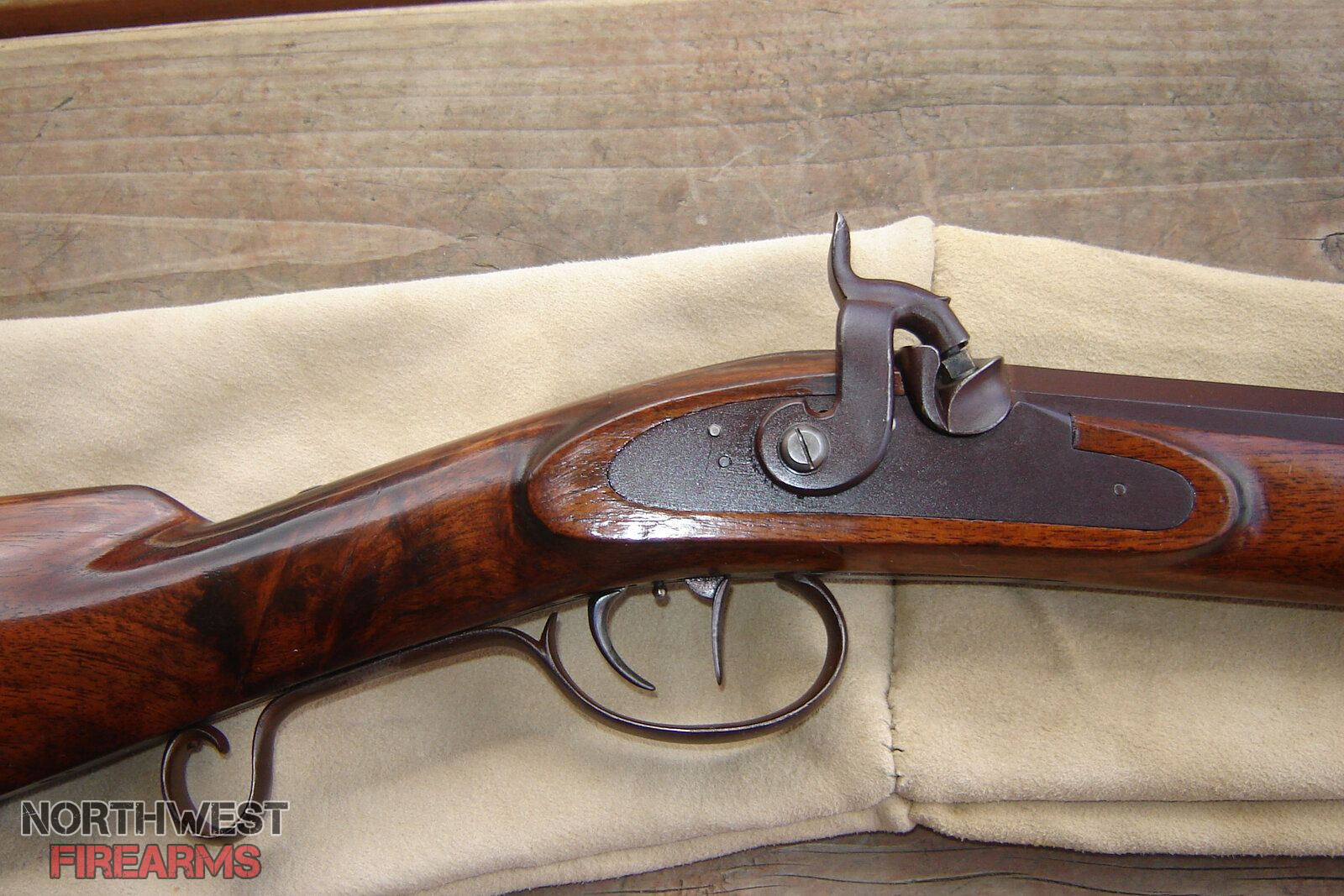
Sort of think of them like the triggers on an old original style Hawken rifle. You take much of the heavy lifting out of the hammer pull with the set trigger, to release the sear with a much lighter, tactile hair trigger which removes the potential shift in aim off target.
 
Last Edited:
Sort of think of them like the old set trigger on an old original style Hawken rifle. You take much of the heavy lifting out of the hammer pull with the set trigger, to release the sear with a much lighter, tactile hair trigger which removes the potential shift in aim off target.
My Weatherby works the opposite of a set trigger. It has a real light take up - then you hit the wall and about a three pound (adjustable) pull.
 
NRA high-power rules state a 4.5# minimum trigger pull weight. So if you have a 2.5# first stage, the second only needs to be 2# so it ends up almost feeling like only a 2# trigger. It's so nice you'll want them on all your rifles. This is why you see them for sale.
 
I prefer the 2-stage for anything where I may need precision at longer range. Being able to feel the wall before the break gives me the opportunity to pause and focus on the mechanics of the shot instead of learning (or guessing) the break point and condensing everything into a single set of continuous actions.
 
That's interesting. Was that difficult to get used to? I know it was likely designed that way for a purpose.
Not really. It's a little hard to describe. I think of it as a bit of a "warm up". You pull the slack out of the trigger and then meet more resistance, readying for the actual trigger pull. If I have other rifles with me, I wouldn't say it makes it particularly hard to transition from one to the other. Several of my rifles have Timney triggers set between 2 1/2 and 3 pounds. I had to replace a trigger on a .257 Wby Mag Weatherby Vanguard that was the older model - not the Series II - due to a horrendous trigger. I've never even considered replacing the two-stage trigger on the Series II. It works just fine.
 
Sort of think of them like the triggers on an old original style Hawken rifle. You take much of the heavy lifting out of the hammer pull with the set trigger, to release the sear with a much lighter, tactile hair trigger which removes the potential shift in aim off target.
Might know a thing or two 'bout that..... :D

Triggers of my Hawken rifle.

And just what I can do at 100 and 200 yards .
Andy

 
Just think of the take-up as forplay.

1000006121.jpg
 
2-stage exist because you can have a heavy safe trigger with lots of sear engagement that has a crisp break at 1 1/2-2 lbs.

The first stage moves the sear to the last bit of safe engagement. This leaves only a bit more pull to have a clean break of the trigger, the second stage.
To do the same with a single stage, you need to have very little sear engagement all the time and will typically have the same or more weight than a 2 stage has on the 2nd stage to keep the sear reliably safe.
 
I totally prefer a two-stage trigger because it gives me a tactile feedback loop.
The initial take up steadies my shaking finger. When I hit the wall, I know where the wall is and that with a bit more pressure I will break the wall. And the initial take up has just reminded me about how much more pressure is required to break the wall.
I have never cared much about overtravel and reset but some people do.

Under high stress performance it's nice to have such reminders.

I can go on, there are other benefits, but let this commentary suffice for now.
This.
 

Upcoming Events

New Classified Ads

Back Top