Join the #1 community for gun owners of the Northwest
We believe the 2nd Amendment is best defended through grass-roots organization, education, and advocacy centered around individual gun owners. It is our mission to encourage, organize, and support these efforts throughout Oregon, Washington, Idaho, Montana, and Wyoming.
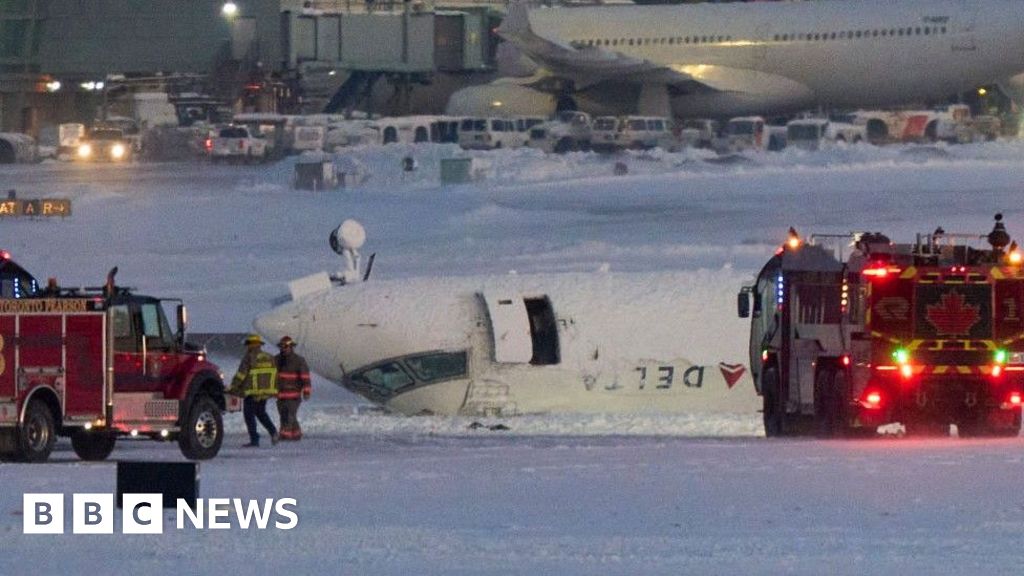
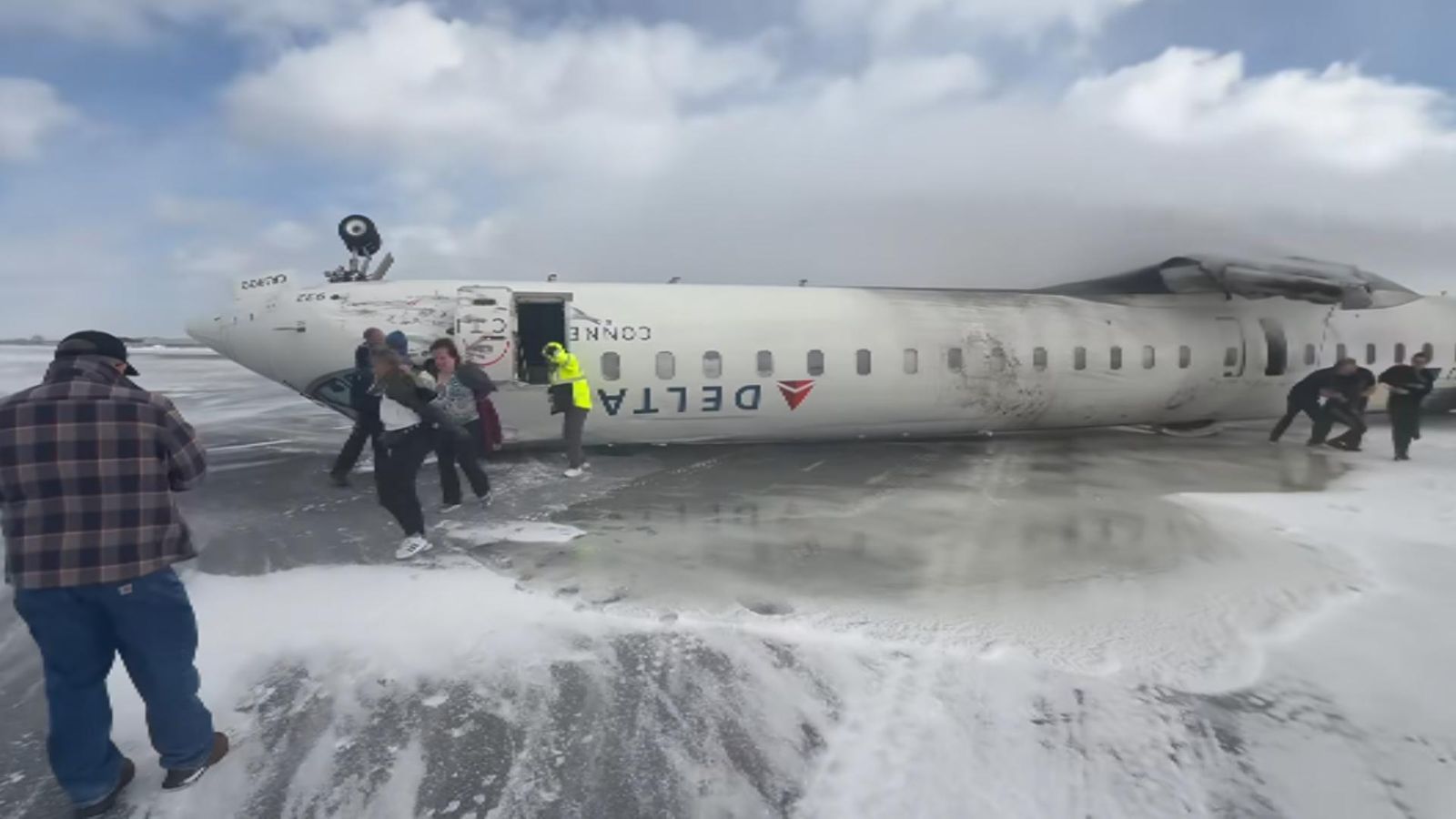
It looks like right wing touches almost immediately. Until I see different I'm going with right landing gear impacted cross road and collapsed. Causing roll to the right and wing impacting ground and breaking off. Subject to change but that's my guess fwiw based on what we've seen so far. If they find right landing gear well behind everything else that woudl be a strong indicator that's what happened.
I don't know much about airport runway construction, but I would think it a very bad idea to have a road cutting through the middle of all those runways at a significant enough elevation difference to cause that
It does look like the landing gear collapsed, maybe it hadn't fully extended and/or locked open?
I don't know much about airport runway construction, but I would think it a very bad idea to have a road cutting through the middle of all those runways at a significant enough elevation difference to cause that
It does look like the landing gear collapsed, maybe it hadn't fully extended and/or locked open?
Not through middle, on outside edge of airport. Looks to me like he hit short of the runway. They all have ring roads. Not saying the road is necessarily elevated above runway, only that it's a visible feature due to snow melted/gravel added? on that road. But that's all from some grainy video (the first one). Could even be a barrier or something instead of a road. Could have also impacted beyond road and it's just collapsed gear upon touchdown. All just guesswork from not much data…
Sharpened and zoomed in. Watch left wing tip. That wing goes down as right wheel touches ground then comes up when wheel collapses. From this angle there certainly doesn't appear to be a cross road.
I don't believe their diagram with yellow lines is accurate. It's just something their peopel put together. Like the Trump shooter they had shooter in the wrong place. They showed plane skidding only a small way. Video shows it skidding a long ways:
The Check Airman in the Blackhawk caused the collision (not an "accident") by several actions.
1) Reporting that he had traffic in sight, when he obviously didn't. I think he just said it to get ATC to let him continue the flight past the airport. He responded so quickly each time that he would not have time to look before he replied. Perhaps he saw the line of aircraft headed for Runway 1, and assumed that the CRJ was in that line, but that was negligent. He did this twice, and at least on the second instance the CRJ was pointing almost straight at him, not in the line with the other traffic, far enough above him that background lighting should not have been a factor, and had its landing lights on!
2) He was responsible, as check airman, to ensure that the pilot being checked was operating within the parameters of the approved flight path. He failed to do this. NTSB hasn't reported other dialogue from the CVR, and either he wasn't pointing out to her the deviations, or NTSB is trying to delay revealing it. Even if he was telling her to correct her errors, she didn't do it, and that lead to the collision. If she wasn't doing it, it was his responsibility to take over the controls to ensure safety of flight.
3) There seems to have been a difference between altitudes he reported to ATC and what was indicated on board the helicopter. Operating less than 500 feet above the ground/water and night, with major variations in altitude indications is reckless, even in visual conditions. This is even worse when night vision goggles are being used, which was the case here. The reported variation was half the maximum altitude (200 feet) allowed near the airport! In practice, they were operating without reliable altimeters, and the radar altimeter was not suitable for establishing a safe (and legal) altitude.
4) The check airman had been advised that the CRJ was doing a visual approach to Runway 33. This would cross the path of his flight, clearly about the same time he would be passing the final approach course. He chose to continue at the same speed, instead of slowing down to let the traffic cross ahead of him.
5) The check airman allowed the pilot to deviate to the right (west) of course, which should have taken the helicopter along the east bank of the river. The glideslope for Runway 33 would direct the CRJ to be over 400 feet high there, instead of a little over 300 feet near the point of impact. This is the difference between life and death.
6) The ATC transmission did not have a pause that would indicate it was complete before the direction to pass behind the CRJ. The check airman was so intent on brushing off ATC that he "stepped on" the last part of the controller's directions by pressing the mike button before the controller finished speaking. This is abnormal radio procedure. One always waits until the transmission has ended, usually for a couple of seconds, because sometimes ATC adds another comment. Everyone else on the frequency is expected to wait for the response to ATC before they transmit. The check airman obviously didn't want to hear from ATC, much less take action to address the controller's concerns. Remember, traffic alerts were going off at this time.
7) The pilot being checked was not highly experienced, and I believe was coming back from a non-flying assignment. She was getting back "up to speed" and flying a difficult course, at night, wearing NVG, in heavy traffic, in a helicopter with older instruments. Under the circumstances, it is not reasonable to expect perfection, and in fact the check airman is tasked to keep the pilot within safe parameters, and if necessary, take control of the aircraft. He failed to do that. I do not assign blame to the pilot being checked, as her responsibility was to do the best she could under the circumstances. So far, there is no evidence that she did anything less.
Great post. This airport is a dumpster fire. As I noted earlier, during my one landing here, we had to go around due to traffic being too close. The Swiss cheese model for this crash has no cheese left, only holes you can fly a 747 through.
125 foot difference for commercial flight is far from huge by any measure. This airport requires two minutes of separation between aircraft when landing for wake turbulence alone. (Which is why they had the literal last minute runway change.) A CRJ 700 is 24 feet tall, the Blackhawk 17 feet...that's 41 feet of aircraft size variables alone.
I build prevention models and conduct safety training for ground-based vehicles around the country and have 27 flight segments currently on the books for this year and will end up with likely five times this number. I won't be making any of them into DCA. (I am going to YYZ, Toronto in a few weeks, though, and not worried even with the recent crash.)
This airport is too busy (because of entitled politicians), can have a twisty approach unlike other airports (based on my experience), allows for other aircraft far too close to approaching commercial aircraft (including training missions),...the root cause analysis is going to look like a forest of connected aspen trees with this one.
I'm not an expert on flying (or staying at Holiday Inns)…but critiquing it, I would say improper flare (almost landed it flat), hard contact starboard landing gear resulting in collapse/loss, wing sucked into the ground…flames, snowball, belly-up dismount by some fortunate folks.
Delta Flight 876 was in the air with 99 passengers and crew on board around 8:30 a.m. Monday when the pilot turned the plane around and landed back at Hartsfield-Jackson Atlanta International Airpo…
Delta Flight 876 was in the air with 99 passengers and crew on board around 8:30 a.m. Monday when the pilot turned the plane around and landed back at Hartsfield-Jackson Atlanta International Airpo…
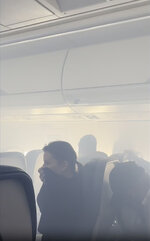
Maybe delta is beta testing their escape slides… (kidding!). Between the Toronto and Australia and this one that's like 3 escape slide events in a week or whatever. I guess the Toronto one a slide pinned people against the plane and they had to pop it with a knife so they could move. Was in a horizon flight and first one turbo broke as we were ready to leave. Got on second plane and cabin filled with smoke as we were taxiing. 3rd plane flew okay. That was a little dash 8 I think. That was like 20 years ago though. Probably too many maint people on drugs? Who knows.
Haha oh yea I was. They had a leave comments at the airport for their airline at the arrival airport. I bet I spent half an hour writing out exactly what I thought. I do recall saying "you guys need to spend more on maintenance or your planes will be falling from the skies!!!!".
Delta airliner made two attempts to land at PDX today late morning, then went to Yakima.
It was the last one to takeoff or land (try) going east. Following planes landed /took off going west. Must have been lots of unstable conditions during the wind shift.
If our Supporting Vendors don't have what you're looking for, use these links before making a purchase and we will receive a small percentage of the sale