Join the #1 community for gun owners of the Northwest
We believe the 2nd Amendment is best defended through grass-roots organization, education, and advocacy centered around individual gun owners. It is our mission to encourage, organize, and support these efforts throughout Oregon, Washington, Idaho, Montana, and Wyoming.
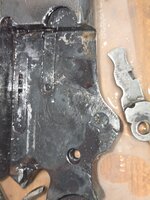
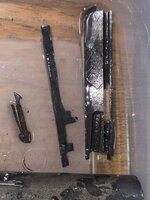
I picked this up on a "fire sale" pun intended.
A lot of work ahead of me, I am looking for sandblasting service and parts and conversation about the project
Thanks!
John
That will be an interesting (maybe frustrating) project. I can't say when the 39A was taken out of production, but it was the old Marlin Firearms that discontinued it. Then they were bought out by Remington. Now it's Ruger. So, drawings and tooling are probably long gone. I'm betting you won't get parts from Ruger. Numrich has been way too spotty to get NOS parts or even scavenged gun parts. Best of luck, and keep us updated on what you may find.
Oh, you should have seen it before! The barrel and tube mag looked like tree branches, so seized up i didnt think I could ever get it apart. It just takes patience. LOTS of patience. And Ebay & numrich parts
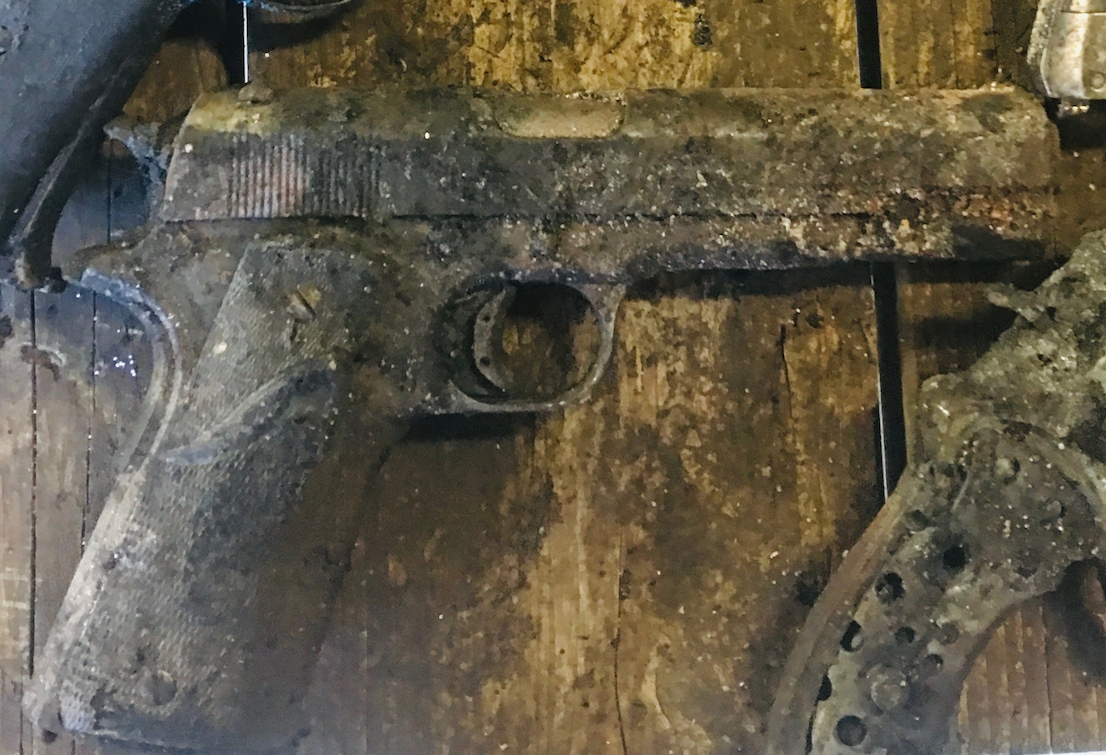
Here is a family heirloom piece a 1913 manufactured Colt 1911 that was damaged by fire and water. I checked the metal for heat damage, via Rockwell C scale testing. I tig welded some of the pitting...
Since the 39 is a 22 rimfire, the last thing I would worry over is the thing blowing up. Not going to happen. The frame and or bolt can be warped enough from the heat that once reassembled, it's not going to cycle very well, matter of fact, it will likely be very hard to cycle the action. The bolt may not even lock up enough to be in battery. I have seen more than a couple of these old fire damaged rifles "restored", and the problem was always a stubbornly stuck action. The owner would muscle and hammer on the lever (or the slide on a pump) the bolt suddenly flying forward, chambering a round, and the impact would cause it to fire. Use a lot of Prussian Blue to figure out where things are going to get sticky in the action, and address that first. After determining that you did or did not have to remove too much material, get that action heat treated properly. Remember that the parts between the trigger and the firing pin have to be working in concert. A warped action does not lend itself to such mechanical harmony.
I don't see any reason to be concerned about the "metallurgy / temper", after all it just arrived from heat treat.
Interesting project. If it were me I'd be thinking more towards a wall hanger. Hard to tell from the photos just how bad the heat exposure was, were there any remnants of the wood remaining .
I helped put a fire damaged High-Standard .22 pistol back together again some years back. What I found out during research was that many older .22 lr guns were not heat treated in the first place.
The old HD-Military got pretty hot, grips burned off and springs soft. That made me nervous, but I was assured by a couple sources that it would be OK to shoot so long as it functioned, though preferably with standard velocity ammo. New springs, grips, magazine, and it shot fine for the few hundred rounds that I fired it, no visible damage that I could see, and I looked closely.
I took it to a local gunsmith to see about having it reblued, and he very sternly chewed me out, saying that I really needed to take it home and cut it up with a hacksaw because it was dangerous and would most certainly blow up in my face. He was rather rude about it, to the point that I would never go back. He could have just said no.
In retrospect I should never have touched it. It had been in my friend's family since the '50s, so I assumed it was something special. I put a lot of time into it and didn't charge a nickel. When it was done, he promptly traded it off to someone else.
As to guns blowing up, in his rant the smith said that a .22 lr operates at the same pressures as a .50 BMG (not true). Even if it did though, pressure is measured in pounds per square inch. It may be the same pounds per square inch, but there's one heck of a lot fewer square inches, therefore a tiny fraction of actual pounds.
For the record....
My concern about the metal being in the fire...ain't that it will blow up...
It is more along the lines of : metal fatigue , the metal being "stressed" or have cracks and like that can't be seen with the naked eye.
All which don't sound like a good thing to me..
Andy
For the record....
My concern about the metal being in the fire...ain't that it will blow up...
It is more along the lines of : metal fatigue , the metal being "stressed" or have cracks and like that can't be seen with the naked eye.
All which don't sound like a good thing to me..
Andy
Good point, and I didn't mean to downplay the risk of fire damage to the metal. It worked in the pistol I brought back to life, but I was concerned about it, and that's just one gun. It would have to be a pretty special gun before I'd do it again; it was NOT worth the effort.
I don't see any reason to be concerned about the "metallurgy / temper", after all it just arrived from heat treat.
Interesting project. If it were me I'd be thinking more towards a wall hanger. Hard to tell from the photos just how bad the heat exposure was, were there any remnants of the wood remaining .
I appreciate your moxie but........... like some girlfriends when they become a lot of work ya got ta let em go ! There is always another around the corner lol .
For the record....
My concern about the metal being in the fire...ain't that it will blow up...
It is more along the lines of : metal fatigue , the metal being "stressed" or have cracks and like that can't be seen with the naked eye.
All which don't sound like a good thing to me..
Andy
Since the 39 is a 22 rimfire, the last thing I would worry over is the thing blowing up. Not going to happen. The frame and or bolt can be warped enough from the heat that once reassembled, it's not going to cycle very well, matter of fact, it will likely be very hard to cycle the action. The bolt may not even lock up enough to be in battery. I have seen more than a couple of these old fire damaged rifles "restored", and the problem was always a stubbornly stuck action. The owner would muscle and hammer on the lever (or the slide on a pump) the bolt suddenly flying forward, chambering a round, and the impact would cause it to fire. Use a lot of Prussian Blue to figure out where things are going to get sticky in the action, and address that first. After determining that you did or did not have to remove too much material, get that action heat treated properly. Remember that the parts between the trigger and the firing pin have to be working in concert. A warped action does not lend itself to such mechanical harmony.
If our Supporting Vendors don't have what you're looking for, use these links before making a purchase and we will receive a small percentage of the sale