


JavaScript is disabled
Our website requires JavaScript to function properly. For a better experience, please enable JavaScript in your browser settings before proceeding.
Sadly bugging out would be for a temporary emergency not a long term solution to an emergency. Id have a three day pack.. but I'd never bank on bugging out. If it's so bad I have to vacate my residence, I'm not sure I'd want to. Sure floods and fires.. but is that really bugging out or is that simply avoiding a natural disaster then coming back to clean up the mess? And in that regard, shouldn't an investment be made towards the structure to lessen the risk of those natural disaster issues? Metal roof, water lines, no trees or brush, proper water mitigation trenching..etc.

For bugging out, ti pack water, medical, gas, food, clothing, shelter, tools..etc the logistics rapidly break down. Especially considering new (even previously scouted areas) and having to reestablish a new hard set location and firelines. I've spoke with folks that think when the SHTF that they'll be the only ones informed and on the road.
Those roads are all getting clogged or worse shut down. No one is going anywhere of great distance if they have bottle neck exits like main roads, free ways and highways.

Not to mention you'll have hoards of the unprepared doing anything they have to in order to take what you have to survive on the road. "We are only 3 meals away from anarchy".. I'd actually say three weeks, which is roughly 63 meals (3 per day, 21 days).. but still.. there is a limit and everyone reverts to their primal animal instincts fairly quickly. Not all, but let's be real.. most. Those panic buying toilet paper type folks. The ones absolutely brain washed by social media and the news. They saw one nation has supply issues, they all went out and drained supply locally.. not realizing Oregon has their own paper plants (aunt works in said industry) and it was NEVER under any strain or supply issue UNTIL people started to panic buy for no GD reason other than videos from China and Australia.
..You can tell I'm not a fan of the smooth brain masses.

Not to tut tut one's survival efforts, it's just that in all my earlier research, bugging in was far more practical and sustainable.
 
Many of those who bugged out up here in 2020 due to the fire, loaded up their vehicles and RVs (usually trailers) as much as they could and headed down the mountain to parking lots.

They had several advantages on me; I live alone and could only drive one vehicle. They had families, most of whom could drive vehicles, and multiple people to load up stuff. If it happens to me again, I will load up my truck, not my SUV - but I will have to leave behind two vehicles and my motorcycles.
 
Many of those who bugged out up here in 2020 due to the fire, loaded up their vehicles and RVs (usually trailers) as much as they could and headed down the mountain to parking lots.

They had several advantages on me; I live alone and could only drive one vehicle. They had families, most of whom could drive vehicles, and multiple people to load up stuff. If it happens to me again, I will load up my truck, not my SUV - but I will have to leave behind two vehicles and my motorcycles.
You need an enclosed trailer.
 
You need an enclosed trailer.
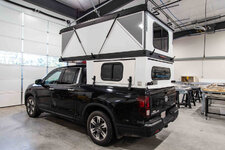
I have a truck with 12' flatbed. What I need is a habitat that goes on that bed.

I am thinking this would do fine - but I would need them to make one 12' long:

12_webIMG_2717.jpg
 
My first thought was that if we are at war with part of our government, God forbid, one of their tactics may be to burn us out intentionally. We mountain people would be forced to flee our cabins in the woods.
Any kind of fighting, be it foreign invasion, civil strife, or whatever, is capable of generating fires from multiple sources. I've watched enough documentaries to notice that fire seems to go hand in hand with combat. Unfortunately, due to decades of mismanagement, our forests, with few exceptions, are tinder boxes just waiting for a spark. Not to mention any malign actor that realizes this and sets them intentionally.

...the USFS and BLM's encouragement of superfires due to intentional lack of forest management, etc.

The current "let it burn" philosophy as a cure for the build up of fuel resulting from the previous management practice of fire exclusion would seem to conflict with TPTB stated goal of reducing carbon emissions, but what do I know? :s0092:
 
Exposed walls may have a stone (real stone) facade. Windows will have security shutters - probably metal. Roof will be metal - maybe with sprinklers installed. Probably have gravel around the house instead of grass (besides fire, field mice are a real issue here).
For those pondering future construction of a retreat of some type, even just for recreational use, the use of nonflammable materials to the greatest extent possible is without a doubt very prudent.
 
For those pondering future construction of a retreat of some type, even just for recreational use, the use of nonflammable materials to the greatest extent possible is without a doubt very prudent.
Cement board (Hardi Plank, etc.) is your friend. That and good defensible area around the structure.
 
I don't miss living in the woods when had a home years ago in Pollock Pines, CA. We made burn piles when we could burn and you did need a burn permit to burn the yard waste. I had grass and weeds around the home and I would use a 2 cycle string trimmer to trim the grass and put in a burn pile.

Once burning green waste was banned in the summer months I would put tarps over the burn piles and waited the burn ban to be lifted. I had a real Husqvarna Chainsaw that was made in Sweden. It was so reliable compared to Husqvarna chainsaws that are made in China. Bought one at Home Depot and worked for a few years and then went kaput and did light duty compared to Pollock Pines.
 
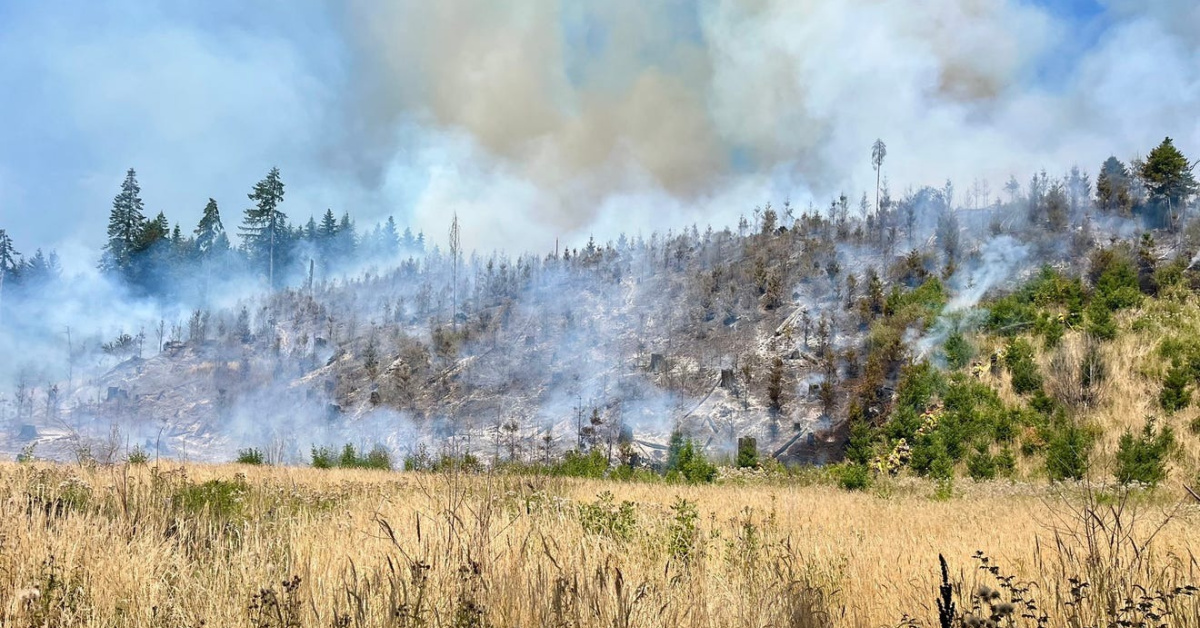
I hadn't really given this a lot of thought until recently, but my BOL is in a remote location in an area prone to wildfires. Which prompts me to ask the general question: Is it a realistic strategy in our region to bug out in a SHTF/TEOTWAWKI situation? If there is a general system breakdown, presumably there will be no coordinated wildfire control efforts. One could leave one's primary residence for a BOL, only to become a refugee again during fire season. Not only might there be no coordinated wildfire response, there could conceivably be more causes of uncontrolled wild fires.

I've pretty much given up on the idea of bugging out at this point anyway due to age and health considerations, but I'm wondering what you all think on this topic.
Experience in Paradise, California will prove helpful. One fellow got a new Toyota truck after his grille and fender flares melted and paint was scorched while he evacuated residents through the flames and heat.
 
Experience in Paradise, California will prove helpful. One fellow got a new Toyota truck after his grille and fender flares melted and paint was scorched while he evacuated residents through the flames and heat.
There are so many plastic parts on cars nowadays. They can be ignited by intense radiant heat, as can tires. I think that's the reason why some people were burned alive in their cars as they tried to evacuate. Many cars burned without flames ever reaching them, causing some people to speculate about directed energy weapons and such.
 
There are so many plastic parts on cars nowadays. They can be ignited by intense radiant heat, as can tires. I think that's the reason why some people were burned alive in their cars as they tried to evacuate. Many cars burned without flames ever reaching them, causing some people to speculate about directed energy weapons and such.
If the heat is hot enough to catch parts of your car on fire, then it is hot enough to cook you first. You can roast someone inside a tank by using flames - e.g., enough Molotov cocktails.

If you want to reduce heat inside a car, use ceramic window film.
 
I don't miss living in the woods when had a home years ago in Pollock Pines, CA. We made burn piles when we could burn and you did need a burn permit to burn the yard waste. I had grass and weeds around the home and I would use a 2 cycle string trimmer to trim the grass and put in a burn pile.

Once burning green waste was banned in the summer months I would put tarps over the burn piles and waited the burn ban to be lifted. I had a real Husqvarna Chainsaw that was made in Sweden. It was so reliable compared to Husqvarna chainsaws that are made in China. Bought one at Home Depot and worked for a few years and then went kaput and did light duty compared to Pollock Pines.
I burn twice a year, one just before burning season ends in June, and one just after it starts again and we have had one rain in the fall. I burn mostly stuff that I prune or cut down, and limbs that have fallen. We had some wind about a month ago and there were lots of limbs that fell. Over the winter lots of limbs fall from wind and snow.
 
Any kind of fighting, be it foreign invasion, civil strife, or whatever, is capable of generating fires from multiple sources. I've watched enough documentaries to notice that fire seems to go hand in hand with combat. Unfortunately, due to decades of mismanagement, our forests, with few exceptions, are tinder boxes just waiting for a spark. Not to mention any malign actor that realizes this and sets them intentionally.


The current "let it burn" philosophy as a cure for the build up of fuel resulting from the previous management practice of fire exclusion would seem to conflict with TPTB stated goal of reducing carbon emissions, but what do I know? :s0092:
Ever notice that you do not often hear of corporate managed forests burning up? That's because they clean up the mess on the forest floor especially once they do the major thinning. When the forest floors burn, the fires burn the base and roots of the trees killing them. If the floor is clean, the fires run across the tops of the trees and will regenerate growth after the fire ends. Government forest management, and their no-road philosophy, has been the cause of the superfires of late, not the solutions. They refuse to learn from their past mistakes.
 
Ever notice that you do not often hear of corporate managed forests burning up? That's because they clean up the mess on the forest floor especially once they do the major thinning. When the forest floors burn, the fires burn the base and roots of the trees killing them. If the floor is clean, the fires run across the tops of the trees and will regenerate growth after the fire ends. Government forest management, and their no-road philosophy, has been the cause of the superfires of late, not the solutions. They refuse to learn from their past mistakes.
I think you have it backwards

View: https://youtu.be/mZDol3pHkMI?si=pVQx_pvIBefMWQfJ
 
There are so many plastic parts on cars nowadays. They can be ignited by intense radiant heat, as can tires. I think that's the reason why some people were burned alive in their cars as they tried to evacuate. Many cars burned without flames ever reaching them, causing some people to speculate about directed energy weapons and such.
Oh, they're out there. I seen 'em!
 
There was a fire Sunday over in Laurel - about 5 miles away from my house.

It seems a field (probably wheat - maybe a combine - very common) caught on fire. I didn't see or know about it until I was driving down the mountain and saw it from the road. Neighbors heard about it and sent out emails - I need to check my email more often (I was busy getting ready to go see my daughter).

The TVFR put it out, but it took them about 6 hours as it was fast spreading.

If SHTF, such fires would grow without much, if any, firefighting happening. If we had a Cascade earthquake, the firefighters probably couldn't even get to it, and/or would be busy with other fires/etc.
 

Upcoming Events

Back Top