


JavaScript is disabled
Our website requires JavaScript to function properly. For a better experience, please enable JavaScript in your browser settings before proceeding.
Started the day early to work on firewood supply for next season and on way back shot up many dozens of rounds through S&W 325PD. Between that and the other day, it is quite funky, and will be getting a thorough cleaning on Monday. Alas, though new (to me) wheelgun came with case, but there is no manual. And I can't find a Scandium—specific one on Smith's site. Google search results are all over the map.

Any reason normally solvents and lubricants (e.g., Hoppes #9, Ballistol, 3-in-1 Oil, Blast & Shine, etc.) is a no go on this material? I wouldn't think so, but, as mentioned, Intratubes has mixed messages. I'll contact S&W as need be.

Thanks much.
 
Last Edited:
Your golden man, just clean it like anything else. Mine has ridden in a sweat filled pocket for over 10 years with no rust/solvent concerns.
 
Last Edited:
Lots of info on cleaning the PD's on line. Search scandium cleaning titanium cylinder. The titanium cylinder is the main concern. Do not scrub the cylinder with anything abrasive that could damage the cylinders coating. Do not be overly concerned about a bit of blackening of the cylinder face. Damaging the coating can lead to erosion. I don't know how much of an issue the erosion risk is with the 45 acp, however its a known issue with the .357's such as the 340PD.

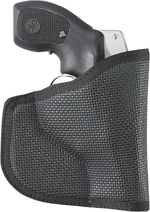
As a side comment, remember when selecting your holster something lighter than the gun it's self may be desirable. Still searching for the solution for my 340PD. ;)
 
1749992328504.png
I carry my 340 PD in the front jean pocket in a DeSantis pocket holster.
 
Most important thing next to not abrasively removing carbon from cylinder face is not to shoot 110gr ammo (125gr being marginal) from a Ti alloy cylinder… the flame cutting of frame is guarded by a stainless alloy frame shield, but the cylinder face hole edges can easily be damaged in a starburst pattern, which requires cylinder replacement. I am sorry to report a NWFA member sold me one of these cylinder damaged guns in the past, and unfortunately I didn't see the problem until the transfer was done. He refused to make it right, and S&W stepped up to replace the cylinder on warranty.
 
I have several "Scandium" S&W revolvers - 329PD, 325TR and a 327TRR8 and they are some of my favorite revolvers.

Bear in mind that with a "scandium" gun the frame is an aluminum alloy with a small (less than 1%) percentage of scandium which makes the aluminum alloy much stronger and resistant to heat.

Calling them "Scandium" is a smart marketing ploy by S&W.
 
Most important thing next to not abrasively removing carbon from cylinder face is not to shoot 110gr ammo (125gr being marginal) from a Ti alloy cylinder… the flame cutting of frame is guarded by a stainless alloy frame shield, but the cylinder face hole edges can easily be damaged in a starburst pattern, which requires cylinder replacement. I am sorry to report a NWFA member sold me one of these cylinder damaged guns in the past, and unfortunately I didn't see the problem until the transfer was done. He refused to make it right, and S&W stepped up to replace the cylinder on warranty.
Was the replacement cylinder titanium?
 
Thanks all. Since posting, I found a S&W manual on our NAS that makes reference to cleaning titanium alloy cylinders. Reproduced in the off-chance it is of interest:

Titanium alloy cylinders weigh approximately 60% of what a similarly sized stainless steel cylinder weighs and yet is able to withstand the same operating pressures. Care and cleaning of the revolver's titanium alloy cylinder consists of normal gun cleaning procedures using high quality gun oil and cleaning solvents when necessary. However, under NO circumstances should the cylinder's chambers (charge holes) or front face be cleaned with an abrasive material such as sand paper, Scotch Brite™, Crocus Cloth, etc. To do so will disrupt its protective surface layer and greatly reduce the cylinder's service life because of excessive erosion that will take place while firing and will void your revolver's warranty.
I came across one video that recommended using a nylon, rather that brass, bore brush. No idea if that is necessary, but it is easy enough to use one over the other.

Interesting point on bullet weight. The aforementioned manual makes note of that for the .357 variant:

CAUTION: Do not use Magnum loadings with bullet weights of less than 120 grains - This will reduce the possibility of premature erosion in titanium alloy cylinders.
No worries there; this one is in .45 ACP and I've only be using 230-grain ball thus far.

Anywho, thanks much. Hope you all are having a pleasant Sunday thus far. :s0155:
 
Last Edited:
I have several "Scandium" S&W revolvers - 329PD, 325TR and a 327TRR8 and they are some of my favorite revolvers.

Bear in mind that with a "scandium" gun the frame is an aluminum alloy with a small (less than 1%) percentage of scandium which makes the aluminum alloy much stronger and resistant to heat.

Calling them "Scandium" is a smart marketing ploy by S&W.

That sounds.... "scandalous"! :s0108:
 
Tangential question: sonic cleaners and Scandium wheelguns — go or no go? (I am looking to add such for a gaggle of revolvers I shoot often and are therefore often quite funky. If there is any doubt as to material and such a device, I simply won't use it.)
 
Thanks for the info, CG. I have one of these scandalous guns. I haven't shot it enough to need to clean it yet, but this is good stuff to know.
 

Upcoming Events

Back Top