


JavaScript is disabled
Our website requires JavaScript to function properly. For a better experience, please enable JavaScript in your browser settings before proceeding.
BBC excerpt from the report:

Below is an excerpt of that finding from the preliminary report:

"The aircraft achieved the maximum recorded airspeed of 180 Knots IAS at about 08:08:42 UTC and immediately thereafter, the Engine 1 and Engine 2 fuel cutoff switches transitioned from RUN to CUTOFF position one after another with a time gap of 01 sec.

"The Engine N1 and N2 began to decrease from their take-off values as the fuel supply to the engines was cutoff.

"In the cockpit voice recording, one of the pilots is heard asking the other why did he cutoff. The other pilot responded that he did not do so."

Link to the report
 
BBC excerpt from the report:

Below is an excerpt of that finding from the preliminary report:

"The aircraft achieved the maximum recorded airspeed of 180 Knots IAS at about 08:08:42 UTC and immediately thereafter, the Engine 1 and Engine 2 fuel cutoff switches transitioned from RUN to CUTOFF position one after another with a time gap of 01 sec.

"The Engine N1 and N2 began to decrease from their take-off values as the fuel supply to the engines was cutoff.

"In the cockpit voice recording, one of the pilots is heard asking the other why did he cutoff. The other pilot responded that he did not do so."

Link to the report
Now that will be interesting to hear how they deal with this. Assuming true, hard to believe incompetence that bad? If a DEI hire "maybe" but, still a little hard to believe. If it was the one pilot wanting to die and take everyone else out? Damn scary.
 
Now that will be interesting to hear how they deal with this. Assuming true, hard to believe incompetence that bad? If a DEI hire "maybe" but, still a little hard to believe. If it was the one pilot wanting to die and take everyone else out? Damn scary.
Imo incompetence can be ruled out here. One has to pull up on the switch then down. And can't have pulled the wrong switches as it's nowhere near the landing gear. Also it's the common switch they use all the time to shut the plane down.

Even accidental can likely be ruled out due to mechanical lockout in the switches. To be an accident the first switch lockout would have to be faulty. Then accidentally hit it. Then 1 second later accidentally hit the second switch which would also have to have its own mechanical lockout faulty. That's pretty much impossible by the sound of it. Also it would have to happen after takeoff but before they reached altitude so that it could be either landed without engines or have time to restart at least one engine.

Looks like engines were shut down purposely at exactly the right time to make the plane crash. I'm no expert in the slightest by the way. Just summarizing what I've heard from many experts. Reminds me of the "allah akbar" suicide crash and the German one where captain left to the restroom, co pilot locked him out and then flew into a mountain.

I think they are going to take a deep dive into their mental health prior. One video said pilot grandmother was gravely ill or just died (I can't recall which) and the other one just got engaged to be married.
 
Needless to say, any accident that involves loss of lives is a tragedy. I worked at Boeing for 46 years, mostly in commercial airplane sales and marketing. I have had friends calling me and asking me what I know. I don't know anything more than anyone else at this point. I don't like to speculate on the possible cause or causes of an accident. It doesn't matter if it's a Boeing or Airbus or Embraer aircraft, or which company made the engines. Social media is full of speculation and it's not fair, at this point of the investigation, to the pilots or the airline or the maintenance crew or the airframe/engine manufacturers. Let the investigators recover the flight data and audio recorders, and then analyze the data.
Let me just say that the available video is not of good enough quality to discern whether the flaps were deployed for takeoff. They could be at 5 degrees and you would not be able to tell from the video. However, there are four separate steps in the preflight sequence to ensure the flaps are at the proper setting. The software will not let you proceed if flaps are not set.
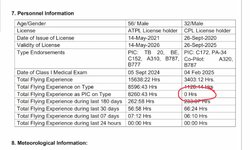
As I said several weeks ago, let's not speculate on what happened until we get an official report. Now we have it, and everything stated therein points to incorrect physical action by one of the pilots. Hopefully further analysis of the voices will be able to differentiate which crew member said why did you switch the engines to cutoff, and which one said I did not do so. Of all the YouTube posting I watched last night, none of them commented on the fact that the F/O was the pilot in command and he had zero flight hours in the 787. I know you have to start somewhere but a very unfortunate first flight. We may never know why the engines were switched off.

1752343853888.jpeg
 
As I said several weeks ago, let's not speculate on what happened until we get an official report. Now we have it, and everything stated therein points to incorrect physical action by one of the pilots. Hopefully further analysis of the voices will be able to differentiate which crew member said why did you switch the engines to cutoff, and which one said I did not do so. Of all the YouTube posting I watched last night, none of them commented on the fact that the F/O was the pilot in command and he had zero flight hours in the 787. I know you have to start somewhere but a very unfortunate first flight. We may never know why the engines were switched off.

View attachment 2126629
I heard it's the same switches in the same location as on 737. Maybe others also? So between simulator and whatever plane he had time on wouldn't it be the most obvious and nearly impossible mistake to make? Especially at that point in time. I mean takeoff is when most vulnerable. To shut engines down one after another on climb out. I don't see how anyone can make that mistake.

Only other thing that comes to mind is the mushroom Alaska guy. Either way mental health at that time would be the driving factor. I agree with you we need more info and full report but I don't see how this could be an "accident".
 
Watching the Blancolerio video, you see what a normal tale off should look like with both flight officers doing their normal routine!
A move toward the panel other then retracting the gear would be very unusual and should be very obvious to the crew, in other words a move to the fuel switches would be a very obvious movement!

All that brings up the question, did the flight officer who asked "Why did. You shut off the fuel" what was his tone, was it panicked, or not? The other voice in answer, was it assured, final, or panicked like he made a mistake?
 
Watching the Blancolerio video, you see what a normal tale off should look like with both flight officers doing their normal routine!
A move toward the panel other then retracting the gear would be very unusual and should be very obvious to the crew, in other words a move to the fuel switches would be a very obvious movement!

All that brings up the question, did the flight officer who asked "Why did. You shut off the fuel" what was his tone, was it panicked, or not? The other voice in answer, was it assured, final, or panicked like he made a mistake?
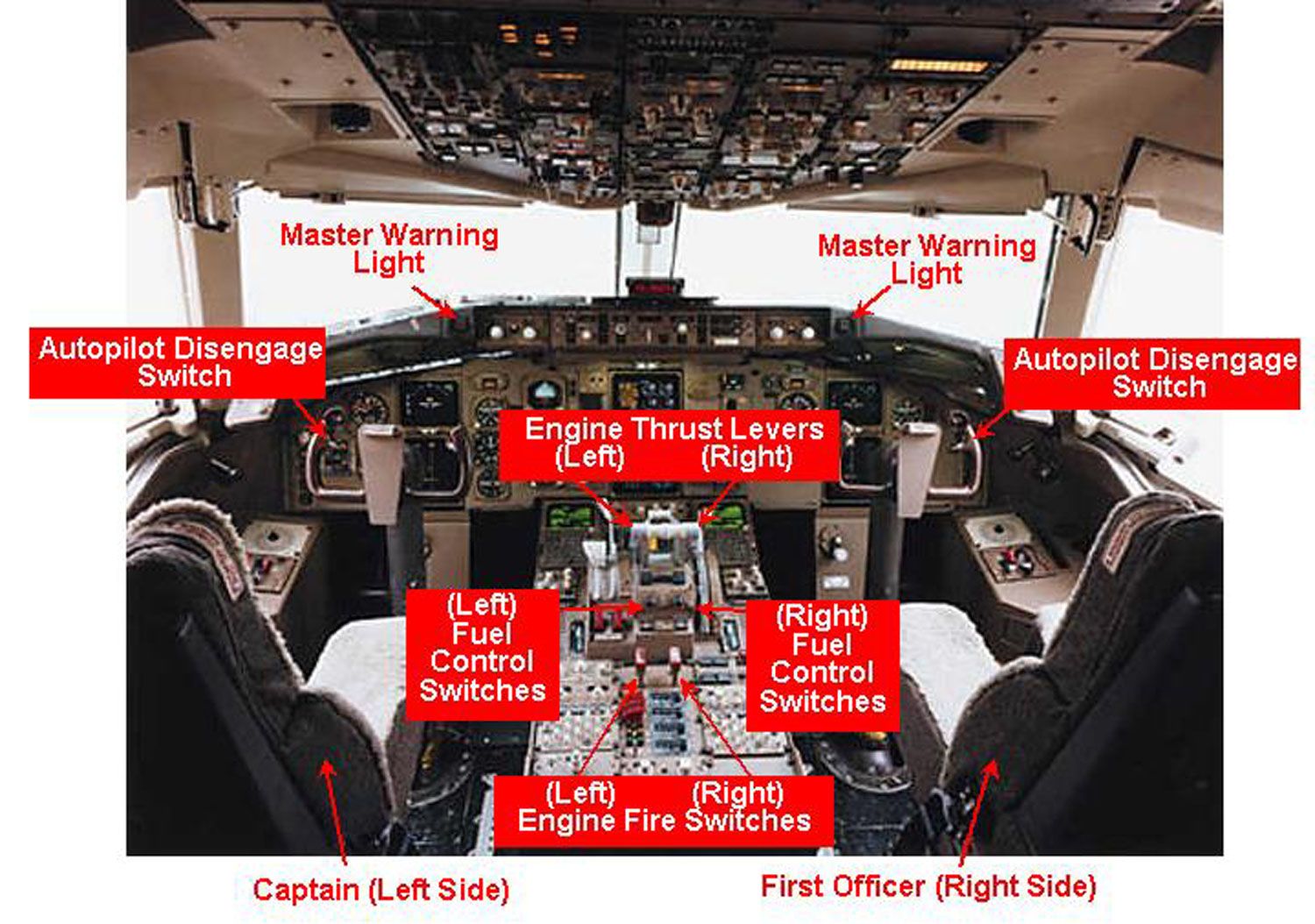
One thing I noticed in that video is one pilots hand is basically going to be resting on the throttles. And the switches are right there where his wrist is below the throttles. So with other guy not watching the throttles he could easily flip one switch off, then the other (1 second later) without being seen. Then other pilot would probably get lights etc (I assume) and ask "why did you do that?"

Then it took 10 seconds for him (I assume the other pilot but only an assumption) to try to restart the engines. One engine was closer to restart than the other at the time of the crash but just not enough time for restart at that altitude according to videos. If he had killed the engines at a higher altitude they would have had a chance. Seems like he did it right then on purpose.
 
One thing I noticed in that video is one pilots hand is basically going to be resting on the throttles. And the switches are right there where his wrist is below the throttles. So with other guy not watching the throttles he could easily flip one switch off, then the other (1 second later) without being seen. Then other pilot would probably get lights etc (I assume) and ask "why did you do that?"

Then it took 10 seconds for him (I assume the other pilot but only an assumption) to try to restart the engines. One engine was closer to restart than the other at the time of the crash but just not enough time for restart at that altitude according to videos. If he had killed the engines at a higher altitude they would have had a chance. Seems like he did it right then on purpose.
I had to go back and rewatch, but the fuel cut switches are BEHIND the throttles between them and the panel, so it would require a much more deliberate move to throw those switches, and might actually require a funky hand position to actuate them!

No matter what, someone in that cockpit deliberately threw those switches!
 
As I said several weeks ago, let's not speculate on what happened until we get an official report. Now we have it, and everything stated therein points to incorrect physical action by one of the pilots. Hopefully further analysis of the voices will be able to differentiate which crew member said why did you switch the engines to cutoff, and which one said I did not do so. Of all the YouTube posting I watched last night, none of them commented on the fact that the F/O was the pilot in command and he had zero flight hours in the 787. I know you have to start somewhere but a very unfortunate first flight. We may never know why the engines were switched off.

View attachment 2126629
The copilot could not log time as Pilot in Command (PIC) when he was flying the aircraft, because he was legally not rated as PIC. This does not mean that he was incapable of flying the aircraft. He had lots of time in the type, and should have made lots of takeoffs and landings, since airline procedure is to trade them off.

Getting the Type Rating to qualify as PIC is expensive, and is provided by the airline when they want to upgrade the pilot. In no way was the copilot unqualified to fly the airplane for this takeoff.
 
I had to go back and rewatch, but the fuel cut switches are BEHIND the throttles between them and the panel, so it would require a much more deliberate move to throw those switches, and might actually require a funky hand position to actuate them!

No matter what, someone in that cockpit deliberately threw those switches!
It will be hard to develop a guard that restricts ability of the flight crew to use the fuel cutoff controls without complicating emergency procedures.

The most likely "fix" is to put a second set of switches in-line in a location widely separated from the standard switches, wired so that both switches must be moved to shut off fuel. More complicated, but not as much as almost any other solution.
 
Not "puncture proof" since the bullets made holes. Puncture resistant, because the holes did not lead to structural failure.

Aircraft have large areas where a bullet hole will prove insignificant, and many where a bullet can do serious damage. The vulnerable places are often of very limited size, like electrical connections and hydraulic control valves. Hydraulic lines are both vulnerable and hard to damage with small arms, especially at long range. Cabin pressurization makes the fuselage area more vulnerable, and that increases with altitude, but at lower altitudes, the pressure differential is much lower, hence less of a factor.

In short, it takes a very lucky hit with small arms fire to seriously damage an airliner, but it can still happen.
 
It's official, the 737 max is bulletproof:
Interesting factoid from the Second Great War.....

During WWII, Allied forces, guided by statistician Abraham Wald, reinforced areas of aircraft that showed few or no bullet holes, such as engines and cockpits, rather than heavily damaged areas. This paradox arose from survivorship bias—planes returning with holes in wings/tails proved those areas could withstand damage, while missing holes indicated areas where hits were fatal.
 
Plane crashed into fire truck at LaGuardia. Only 1 fatality. Traffic controller screwed up.

This was like 2 days after a near crash where one lane missed another by 300'. Which was another traffic controller screw up. That might have been at JFK, can't recall.

 
Plane crashed into fire truck at LaGuardia. Only 1 fatality. Traffic controller screwed up.

This was like 2 days after a near crash where one lane missed another by 300'. Which was another traffic controller screw up.

They are now saying both pilots died
 

Upcoming Events

New Classified Ads

Back Top