


JavaScript is disabled
Our website requires JavaScript to function properly. For a better experience, please enable JavaScript in your browser settings before proceeding.

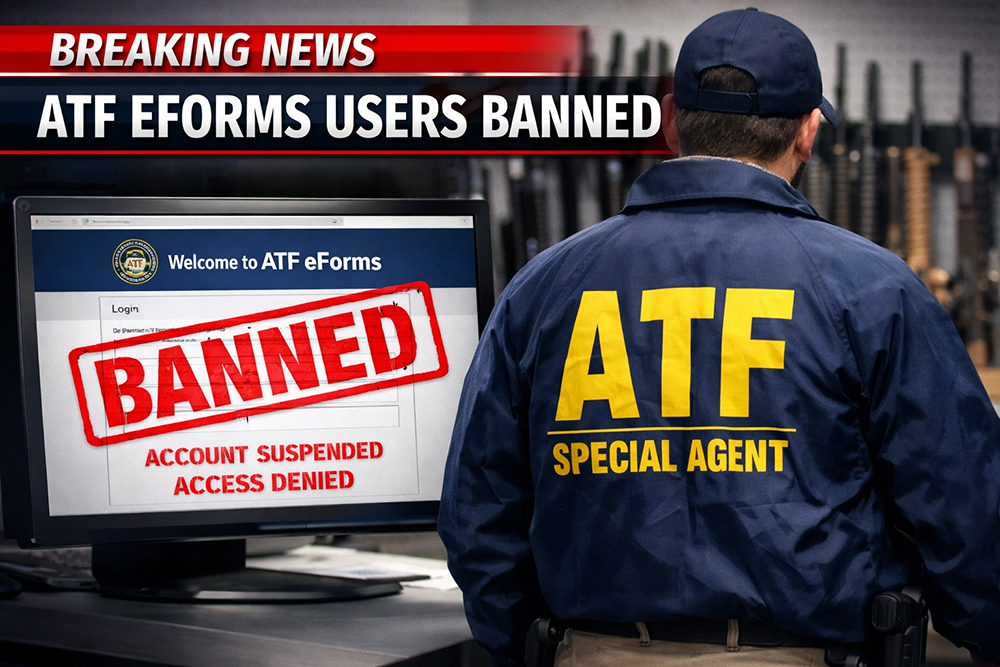
Supposedly there's a "security flaw" in the eForms portal relating to the drop down menu for "reasons" for applying for registration of NFA items
Ok, so this, as written, was not a "security exploit." It was a "form submission oversight" and was the wrong way to "lock down" a free-form text field.

What would have been an exploit would be if that free-form text field allowed the injection of malicious Java or SQL code due to lack of input sanitization and validation. That would have allowed an attacker to run code of their choice on the server, potentially opening up other exploits and allowing for the hostile takeover of the whole system.

But in this case the ATF still allowed free-form text submissions to that field, they just made it so you had to implement those submissions yourself as the form only allowed for one pre-filled option. The system was still working as designed, and I would submit this is a legal and authorized workaround as per the design of the form itself. Code, like laws, is not subject to intent, it is only subject to as written. If you make a free-form field publically accessible (even if it is only through publically available browser tools) then you should expect the public to fill those fields as they intend to, not as you intend them to.

If you do not intend them to fill those fields out as they see fit you should not make them a free-form text field, you should make it a binary option; "for all legal purposes" <yes/no>.
 
SanitizeYourDatabase.jpg
 
If you do not intend them to fill those fields out as they see fit you should not make them a free-form text field, you should make it a binary option; "for all legal purposes" <yes/no>.
A friend of mine put "To Exercise My God Given Rights" ATF denied it, admitted it was a valid reason after being contacted by GOA, then told him to resubmit with a different reason after saying that was a valid reason, and now there are lawyers involved
 
A friend of mine put "To Exercise My God Given Rights" ATF denied it, admitted it was a valid reason after being contacted by GOA, then told him to resubmit with a different reason after saying that was a valid reason, and now there are lawyers involved
"For instance, one member of Gun Owners of America (GOA) reportedly entered that they sought the item to "exercise God-given rights". The ATF examiner reviewing the application rejected it on the basis of this wording, deeming it unacceptable.

When GOA highlighted this denial on the social media platform X (formerly Twitter), it quickly gained traction"

From the linked article, was this the same friend?
 
"For instance, one member of Gun Owners of America (GOA) reportedly entered that they sought the item to "exercise God-given rights". The ATF examiner reviewing the application rejected it on the basis of this wording, deeming it unacceptable.

When GOA highlighted this denial on the social media platform X (formerly Twitter), it quickly gained traction"

From the linked article, was this the same friend?
I believe so, yes
 
A friend of mine put "To Exercise My God Given Rights" ATF denied it, admitted it was a valid reason after being contacted by GOA, then told him to resubmit with a different reason after saying that was a valid reason, and now there are lawyers involved
Yep, this whole thing is just a way for the ATF to play the "we were wrong; we did nothing wrong" game. IMHO the only way they "win" that game is to remove the field entirely, and tacitly admit we don't need a reason. This whole game with one-option drop-downs or even hypothetical "check agree" options as to reasons is really trying to shove words into peoples mouths when you think about what the question actually is. They can either argue that they need a valid reason to approve the form, and then fight about that in court when someone disagrees with a denial, or they can drop the requirement entirely.
 
The reason, much like the old CLEO sign off were just ways to keep 'undesirables' (read that as minorities and poor people) from getting to play with rich people toys.

I know a bit more about the lawsuit and it has all the hallmarks of the brace thing that just happened, as in:
They lost the cases losing the right to limit what you could use as a reason so somehow that means they won the right to limit what you could use as a reason
 
Ok, so this, as written, was not a "security exploit." It was a "form submission oversight" and was the wrong way to "lock down" a free-form text field.

What would have been an exploit would be if that free-form text field allowed the injection of malicious Java or SQL code due to lack of input sanitization and validation. That would have allowed an attacker to run code of their choice on the server, potentially opening up other exploits and allowing for the hostile takeover of the whole system.

But in this case the ATF still allowed free-form text submissions to that field, they just made it so you had to implement those submissions yourself as the form only allowed for one pre-filled option. The system was still working as designed, and I would submit this is a legal and authorized workaround as per the design of the form itself. Code, like laws, is not subject to intent, it is only subject to as written. If you make a free-form field publically accessible (even if it is only through publically available browser tools) then you should expect the public to fill those fields as they intend to, not as you intend them to.

If you do not intend them to fill those fields out as they see fit you should not make them a free-form text field, you should make it a binary option; "for all legal purposes" <yes/no>.
Web dev 101.

Amateur hour for those web devs (and QA/test) that don't know/plan/implement/test for this.

And, BTW, it is multi-level; don't assume that the web-form did the sanitization of the input; the field should test this, the URL (where the input is often passed to the service) should be tested for this, the web services should also sanitize their input data, as should all logic down the line - all the way to the DB/etc.

That is how pros do it, insist be done and the s/w test team AND unit tests ensure (not assume) it has been done (if you don't test/measure, you don't know).

Sadly, a lot of orgs skimp on such basic best practices. Some even resist doing it as "unnecessary". Idiots - lazy idiots.
 

Upcoming Events

New Classified Ads

Back Top