Join the #1 community for gun owners of the Northwest
We believe the 2nd Amendment is best defended through grass-roots organization, education, and advocacy centered around individual gun owners. It is our mission to encourage, organize, and support these efforts throughout Oregon, Washington, Idaho, Montana, and Wyoming.
Oh, boy! I don't know squat, but there is a thread or two about that subject around here.
From what I read there, these two guys were volunteering their experiences. @Cerberus Group or @titsonritz , can you help out here?
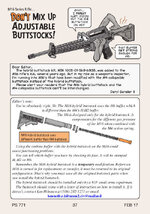
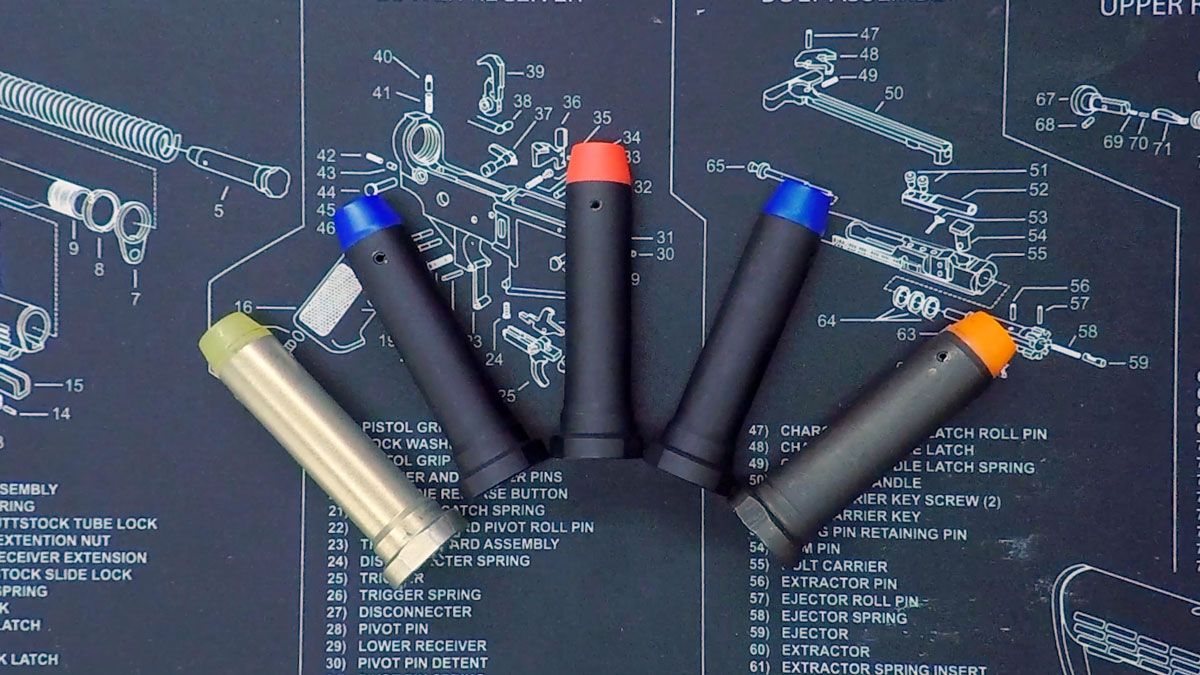
There was a period of time when the M16 (which has rifle length gas and uses a rifle length receiver extension(RE or buffer tube), rifle length buffer, and rifle length action spring) was being converted to collapsible carbine stocks. The military's solution was to use an M4 carbine RE, M4 carbine action spring, and what was called an H6 carbine buffer. An H6 carbine buffer has the same dimensions as a standard carbine buffer, but weigh around 5.0 ounces. Actual H6 buffers aren't common, so most people now use an H2 (4.6oz) or an H3 (5.4oz) carbine buffer.
Gas tube length (carbine, rifle, mid-length), buffer tube length, over/under gassed, AR or M16 cut bolt-carrier, desired rate of fire, then there's buffer weights, buffer spring strengths, etc.
If you're starting out with a 16" bbl carbine-length gas system with an AR cut bolt carrier, you can probably just start out with a "vanilla" MILSPEC carbine buffer system and work from there.
First, the buffer itself regardless of weight needs to match the extension tube size...either carbine, A5, or rifle length...the tube size also affects what spring you'll use.
Once you've established the length you have, time to choose a weight.
Contrary to popular belief, the ejection pattern isn't always correct...but it can be a guideline.
Buffer weight affects overall function, and long term wear. Too light, the rifle beats on itself, too heavy it can induce cycling, extraction and ejection problems.
Also, quality of the buffer matters as well. There is a designated weight for each number, and have found the actual scale weights can vary from different makers.
Spring quality is important, as cheaper springs can have weight differences that can affect function. There's some springs that are flat designed and others that claim to be quiet during operation, then there's recoil reducing styles.
I don't care for any of those types, I prefer the tried and true Sprinco Springs...they will outlast the life of a barrel and BCG.
Gas length system affects overall function and wear.
Regardless of gas length, I always start with a H2 buffer from a quality maker that's true to its scale weight, then add the appropriate length and weight Sprinco spring...Blue for Carbine extension tube, and Green for A5 and rifle length tubes.
In the end, just because its running doesn't mean its running correctly. The rifle can chew on itself for awhile before problems show up.
Choosing the Right Buffer for Your AR-15...Jeremy Bedsaul of TacFix explains why the buffer is a critical piece to keep your whole system running smoothly.
I don't have much more to add to what @Cerberus Group said and have referenced that article he posted on multiple occasions. I will state that it all starts with the gas port size and therefore the barrel. No buffer configuration will fix a seriously overgassed or undergassed barrel, that is a bandaid approach which only "works" so far. That said, I will not build anything for myself without an A5 buffer system unless have a very specific reason for doing so. It is truly the best of both worlds, you get the reliability and softer recoil impulse of the rifle system yet retain the adjustability and compactness of the carbine system while broadening the range of operation compared to the carbine.version. Also, I do not buy in kit form as they typically come with components I will not use and prefer to buy individual parts I want. It is typically more expensive but I get what I want and get the performance I expect. Here is a thread I started on the A5 system awhile back.
I've been a proponent of the A5 system for quite a while now and I know I've swayed a few others in that direction. I can honestly say I won't build a personal carbine without one. Here is an interview with Nick Wantland, head of marketing and sales at VLTOR Definitely worth a read. Vltor A5...
Carbine vs. rifle buffer assembly. Everybody says they know what they're talking about but I believe few people really do. The question is whether the buffer assembly type has a correlation to the gas length, specifically on an AR10/.308. There appear to be two dogmatic camps: Buffer...
www.northwestfirearms.com
This post I wrote contains your typical buffer configurations, including weights and dimensions…
One vs the other. Maybe......it's the weight or the actual size of the BCG or the finish adding friction or even the locking itself? Anyway......you could always just start another build. Isn't that how most of these endless projects begin? LOL. Aloha, Mark
It does matter.
A combination of barrel length, gas port position and size, BCG variations and even your load all incur variables.
When possible I always try to run a rifle buffer and spring or vltor (and copies) A5 buffer system.
Sure they do, but they're gonna be more expensive and often of questionable quality. If spending that kind of money I'd definitely spend it on an A5 system
At the end of the day all that really matters is bolt velocity. There are lots of variables that go into that, but all of them fundamentally try to control that one parameter in some way or another. Some setups offer more margins and are far easier to tune than others, but any combination can be made to work if you put in enough effort into it.
You can tune the system by only tweaking one variable, but that may cause a different kind of problem. In general the longer your gas system the lower the velocity it will generate. Shorter buffer tubes will generate sharper recoil and will wear faster. Heavier buffers will be more prone to short-stroking. Lighter buffer springs will suffer more bolt bounce.
Most of the time, if you have a specific problem, like say unreliable ejection, you will want to tweak a few variables in concert rather than just one variable "all the way" to one extreme or other. That is why it is important to understand what the end goal looks like and the mechanism by which you reach that goal. But once you understand that you can make most anything work reliably, even something as demanding as pistol length gas system on a pistol length buffer tube (one of the hardest to tune due to the combination of high gas volume and short recoil length). As long as the bolt goes back far enough for reliable ejection and pickup, but is not doing so so fast that it is bouncing around at either end of the travel you will have a reliable, well functioning firearm.
I assume you are using that PSA upper you posted in your rear sight thread. I'm familiar with them, I had one and intended to tear it apart and pin gage it for my own records but ended up selling it recently. They are a little overgassed but nothing too extreme. I ran iit on all three receiver extension styles without issues. Based on my experience I'd lean towards a heavier buffer.
If our Supporting Vendors don't have what you're looking for, use these links before making a purchase and we will receive a small percentage of the sale