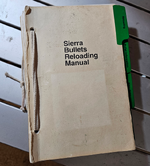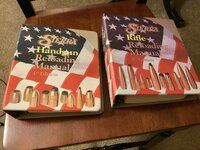






The hard copy version. If you are into the digital one, don't read any further.
I'm wondering if the Sierra reloading manual is a love it or hate it proposition. I dragged my feet for years on buying one of these. Finally, I found one new in wrapper at the Goodwill for next to nothing. 5th Edition. Published year 2003. The next updated version was 6th edition, which came out in Sept. 2019. That is a 16 year interval.
The Sierra manual has been loose leaf format for as long as I've been aware of it. Which I don't much like, because flipping the pages is awkward, they hang up on the binder rings, etc. BUT: I figured that the reason Sierra chose the loose leaf format was so that when periodic, partial updates were published, you could buy those and update your existing book. Wrong. They don't publish updates, they sell a whole new book.
Yes, you can go to the Sierra website and get data on newer products that are not shown in their published book due to the passage of time. Which as I said, can be lengthy. 16 years.
I'm wondering if the Sierra reloading manual is a love it or hate it proposition. I dragged my feet for years on buying one of these. Finally, I found one new in wrapper at the Goodwill for next to nothing. 5th Edition. Published year 2003. The next updated version was 6th edition, which came out in Sept. 2019. That is a 16 year interval.
The Sierra manual has been loose leaf format for as long as I've been aware of it. Which I don't much like, because flipping the pages is awkward, they hang up on the binder rings, etc. BUT: I figured that the reason Sierra chose the loose leaf format was so that when periodic, partial updates were published, you could buy those and update your existing book. Wrong. They don't publish updates, they sell a whole new book.
Yes, you can go to the Sierra website and get data on newer products that are not shown in their published book due to the passage of time. Which as I said, can be lengthy. 16 years.